
About
David Rolla
This site is a field journal: animals photographed where they live, identified as carefully as possible, and recorded so the observation is useful to someone else.
I grew up in the Laurel Highlands of western Pennsylvania. After college I spent three years working in Ohio and then eight in Pittsburgh. I learned to dive in 1996, with my certification dives in the Bahamas, and from 1999 on a dive trip became a yearly habit. A move to Hawaiʻi in 2004 changed the pace, and within a few years the diving became weekly. I took up underwater photography in 2006, and from then on the camera came along every time. Five years later I began posting what I photographed to iNaturalist.
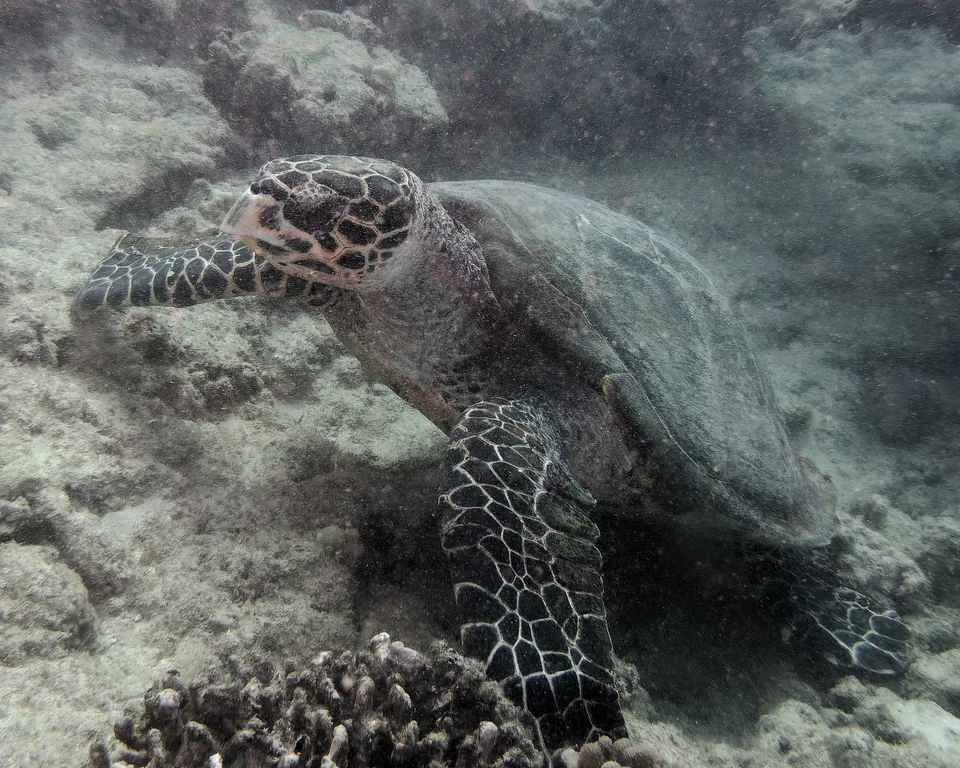
One photo changed what the camera was for. The weekend after the 2011 Tōhoku tsunami, a hawksbill turtle, uncommon in Hawaiian waters, swam past off Oʻahu. A university researcher studying fibropapillomatosis, a tumor disease of sea turtles, came across the image online and asked that it be added to iNaturalist so it could become part of the record.
That one request turned into a backlog project: going back through every photo and identifying each animal. The backlog became a life list, the life list became a habit, and nearly every year since has included a new Indo-Pacific dive destination, sometimes two.
Along the way, some of those photos found uses beyond this site: two new species descriptions, a taxonomic revision, and two papers on new Galápagos fish records; five field guides and reference books, with two more forthcoming; regional reef-fish ID apps; exhibits at the Smithsonian and the California Academy of Sciences; and reference databases from Wikipedia to the Smithsonian Tropical Research Institute. The science belongs to the researchers and authors who did it; the full list is on the Credits page.
The day job is security and technology architecture, after about 30 years in IT. The habits overlap more than you might expect. In the field I photograph everything, because a photo often holds details the naked eye misses, and in both jobs I check the identification before trusting it.
After 22 years in Hawaiʻi, I’m home in the Laurel Highlands, where the Appalachian streams and forests hold some of the most diverse freshwater fauna in North America. Same method, back where it started, and plenty here I can’t name yet.
Most observations are on iNaturalist, where other naturalists review and correct the identifications.
By the numbers
I've kept a log of my dives since getting certified in 1996. Looking back over those records, about two-thirds of my Oʻahu dives took place at the same ten sites, many of them visited dozens of times.
- 2,196dives since 1996
- 2,000+hours underwater
- 18countries and territories
- 250dives at Fire Station (Cathedral), on the North Shore of Oʻahu
Where the archive comes from
- Coral Triangle · 198 dives
- Indonesia (Raja Ampat, Lembeh, Bangka, Manado, Bali) and the Philippines (Anilao, Dumaguete, Malapascua, Tubbataha, Puerto Galera)
- Pacific Islands · 115 dives
- Fiji, Palau, Kiritimati, French Polynesia (Fakarava, Nuku Hiva)
- Hawaiʻi · 1,593 dives
- Home for 22 years, mostly on Oʻahu
- Australia and the Tasman · 20 dives
- Lord Howe Island, Lady Elliot Island
- Indian Ocean · 47 dives
- Maldives, Thailand
- Japan and the North Pacific
- Japan
- Eastern Pacific · 37 dives
- Galápagos, Socorro (Revillagigedo)
- Caribbean · 148 dives
- Bonaire, Cozumel, Aruba, Turks and Caicos, Guanaja
- South America
- Amazon rainforest, Ecuador
- Africa
- Botswana, Zambia, Zimbabwe, South Africa
- Western North America
- Grand Canyon, Zion, Yellowstone, Rocky Mountain National Park, Washington, British Columbia
- Eastern North America · 29 dives
- The East Coast and Florida, from New York to the Keys
- Appalachia · 9 dives
- Laurel Highlands, western Pennsylvania
Contact
For photo licensing, scientific use of an image, survey, monitoring, or documentation projects, or an identification question, email info@wildinsights.net.