
Fifteen years a naturalist
Fifteen years ago today, I got an email from a researcher I had never met.
The previous March, on the weekend after the Tōhoku tsunami, I had photographed a hawksbill turtle off Oʻahu. Hawksbills are uncommon in Hawaiian waters, and I posted the photo online because I was pleased to have seen one. A researcher at the university was studying fibropapillomatosis, a tumor disease of sea turtles. They found the photo and asked me to add it to iNaturalist, so it could be part of a record that scientists use.
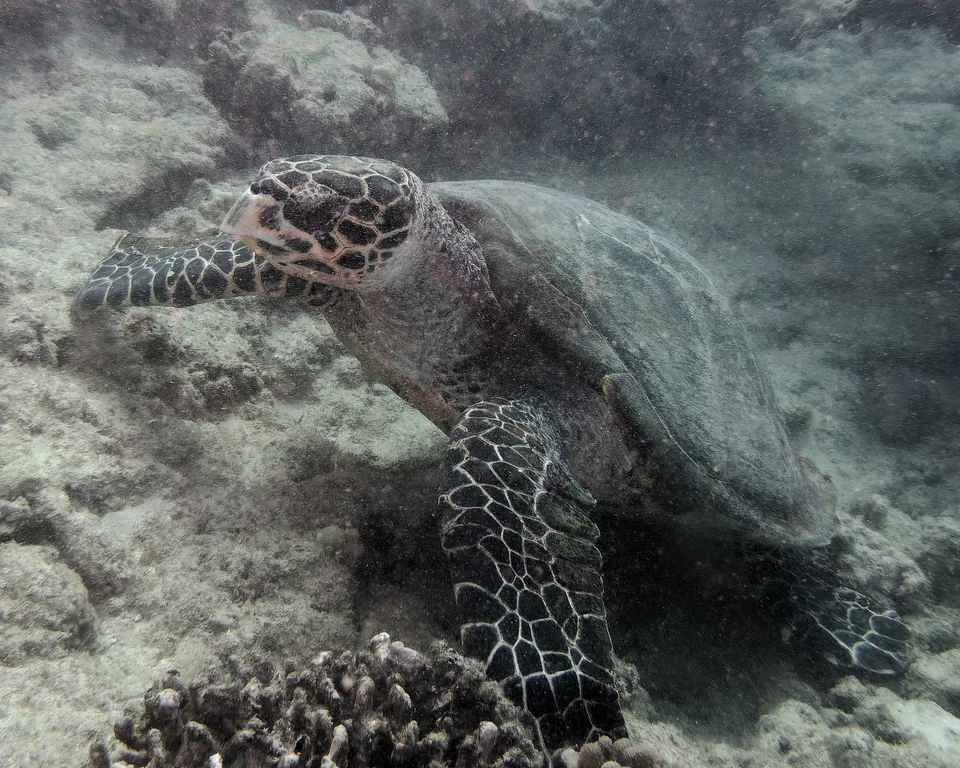
I’d been diving for fifteen years by then, though I’d only taken up underwater photography about five years earlier. Until that email, my photos were little more than souvenirs. After it, they were observations.
Going back through the archive
I posted the turtle. Then I opened every folder of dive photos I had and started to identify what was in them. Fish first, then nudibranchs, then the corals, birds, mammals, and other animals. Many of those identifications were wrong at first. Other iNaturalist users corrected them, and I learned more from those corrections than from any book.
The backlog became a life list, and the life list changed how I traveled. Beginning in 2012, I made a point of visiting somewhere new each year, with most trips centered on diving. Raja Ampat, Lembeh, the Philippines, and Palau took me into the Coral Triangle and its surrounding waters, home to the greatest diversity of reef fishes in the world. Other trips took me farther off the beaten path. Kiritimati was an opportunity I couldn’t pass up. I was invited to join an early trip organized as part of an effort to revive a dive operation that had been inactive for some time. The effort ultimately didn’t take hold. Nuku Hiva in the Marquesas and Fakarava in French Polynesia held a similar appeal, offering the chance to explore places that see relatively few visiting divers. Nuku Hiva was particularly intriguing, with limited reef development but a high number of fish found nowhere else.
Farther south, I visited Lady Elliot Island at the southern end of the Great Barrier Reef and Lord Howe Island, home to the world’s southernmost coral reef. On the other side of the Pacific, the Galápagos offered something entirely different: a place where cold ocean currents bring penguins to the equator. I dived with whale sharks, schooling hammerheads, and sea lions that seemed every bit as curious about us as we were about them. On land, blue-footed boobies and iguanas provided a different kind of encounter.
Not every trip was underwater. Africa and Japan were land trips, and on nearly every dive trip I added a few days ashore for birds, insects, and reptiles.
What the photos turned into
Some of those photographs found uses I hadn’t anticipated. They’ve been used in the descriptions of two newly described species, a blenny from the central Pacific (2020) and a goby from the Maldives (2026), as well as in a 2026 revision of the cleaner wrasses. Two papers on Galápagos fishes have also used my photographs to document new records. Beyond scientific publications, my work has appeared in seven books, ranging from reef-fish guides for Fiji and Sydney to a seagrass volume from China and an encyclopedia of Taiwan’s Indigenous peoples. Other photographs have been featured in a Smithsonian exhibit and two exhibitions at the California Academy of Sciences. The Credits page lists them all.
None of that was a plan. Each one started the same way the hawksbill did: a careful photo, an honest identification, and a record someone else could find.
Home again
After 22 years in Hawaiʻi, I’ve returned to the Laurel Highlands of western Pennsylvania, where my story began. I knew these forests and streams growing up, but I see them differently now. What once caught my eye out of curiosity has become part of a more deliberate effort to observe, photograph, identify, and document the natural world, with identifications open to review by others.
A new chapter of this journal begins in Appalachia. The Indo-Pacific archive stays, and there’s still plenty more to add to it.
To the researcher who sent that email: thank you. One small request started all of this.