Sand and muck slopes
Sand, silt and rubble slopes off the reef, most of them in Lembeh Strait, where the animals hide in plain sight.
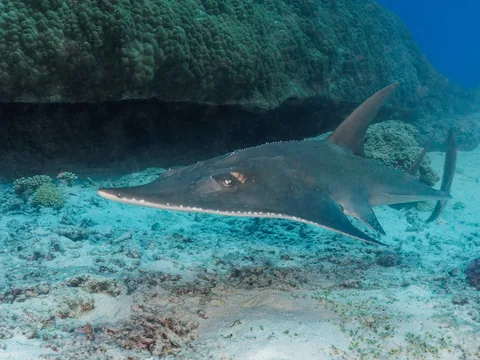
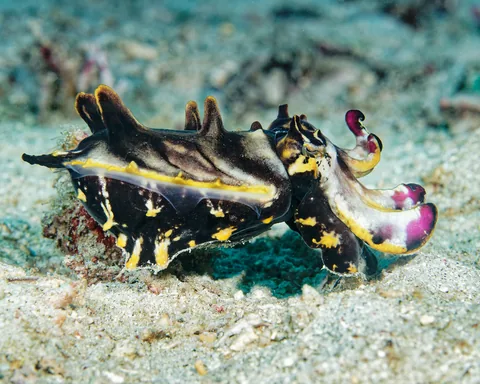
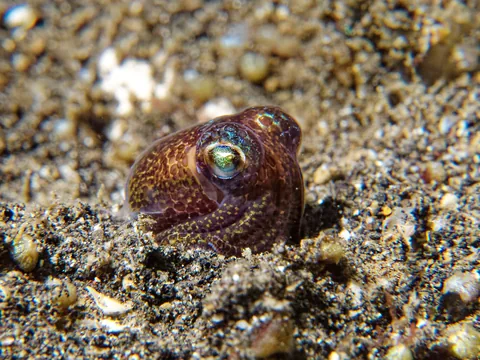
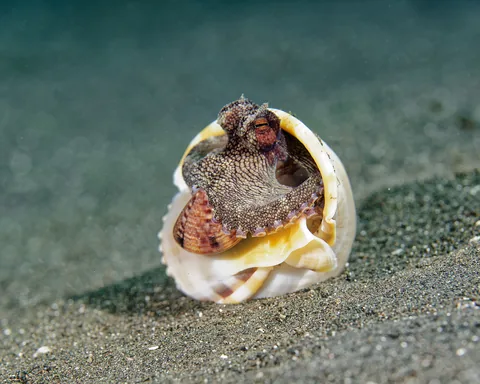
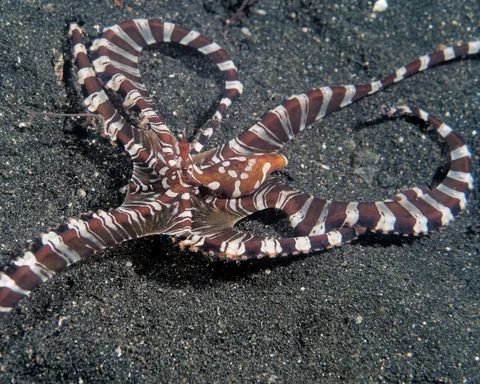
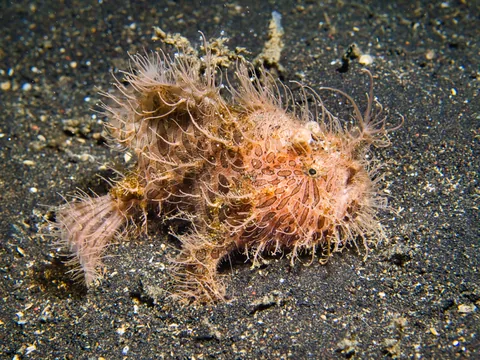
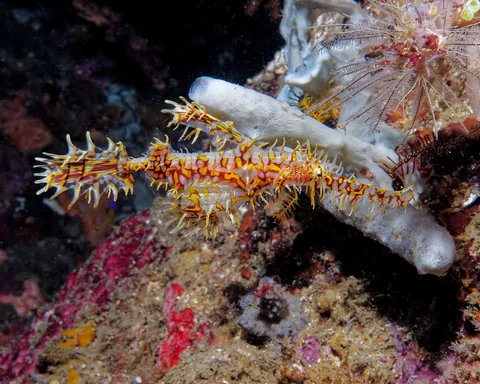
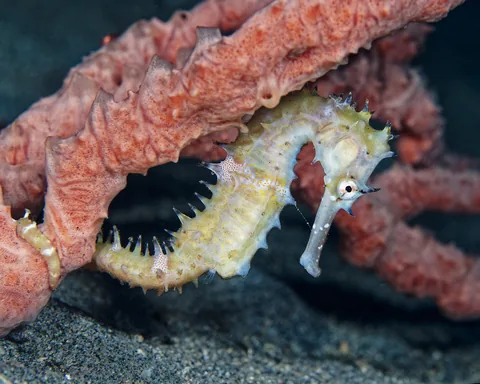
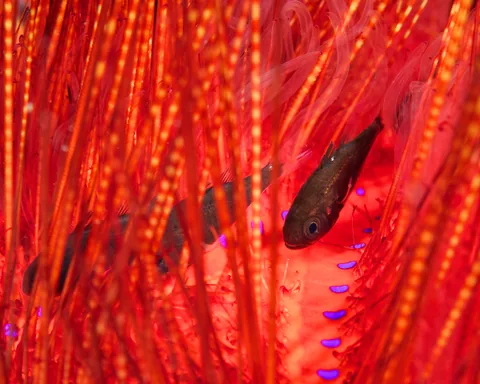
This page leans heavily on one place. Almost every photo comes from the Coral Triangle, and most from Lembeh Strait in North Sulawesi, a channel of dark volcanic sand and silt with little coral and one of the best-known muck-diving sites in the world. With no reef to hide in, the animals here get by on disguise, borrowed shelter or poison. The coconut octopus carries coconut halves and clam shells across the bottom and pulls them over itself when threatened, which Finn and colleagues described in 2009 as tool use in an invertebrate. The urchin cardinalfish lives in small groups among the spines of long-spined urchins, while the frogfish, the ghost pipefish and the spiny seahorse survive by looking like something else. Hawaiʻi and Queensland have a single photo each, and the Queensland one carries the warning. The white-spotted guitarfish belongs to the wedgefishes and giant guitarfishes, which Kyne and colleagues assessed in 2020 as the most imperilled marine fish families in the world, with all but one of their sixteen species Critically Endangered.
Sources: Finn et al. 2009, Defensive tool use in a coconut-carrying octopus · FishBase, Siphamia tubifer · Kyne et al. 2020, The thin edge of the wedge
21 photos · 4 regions · IUCN habitat 9.4 / 9.5
Coral Triangle
18 photos · All of Coral Triangle
Pacific Islands
1 photo · All of Pacific Islands
Hawaiʻi
1 photo · All of Hawaiʻi
Australia and the Tasman
1 photo · All of Australia and the Tasman